14-Day Returns* · 2-Year Warranty · Worldwide Shipping, US included

14-Day Returns* · 2-Year Warranty · Worldwide Shipping, US included
14-Day Returns* · 2-Year Warranty
Worldwide Shipping, US included
14-Day Returns*
2-Year Warranty
Worldwide Shipping, US Included
Guide
Discover how haptic gaming makes games feel physical.
by
OWO
-
October 5, 2026
Reading Time:
7 min read
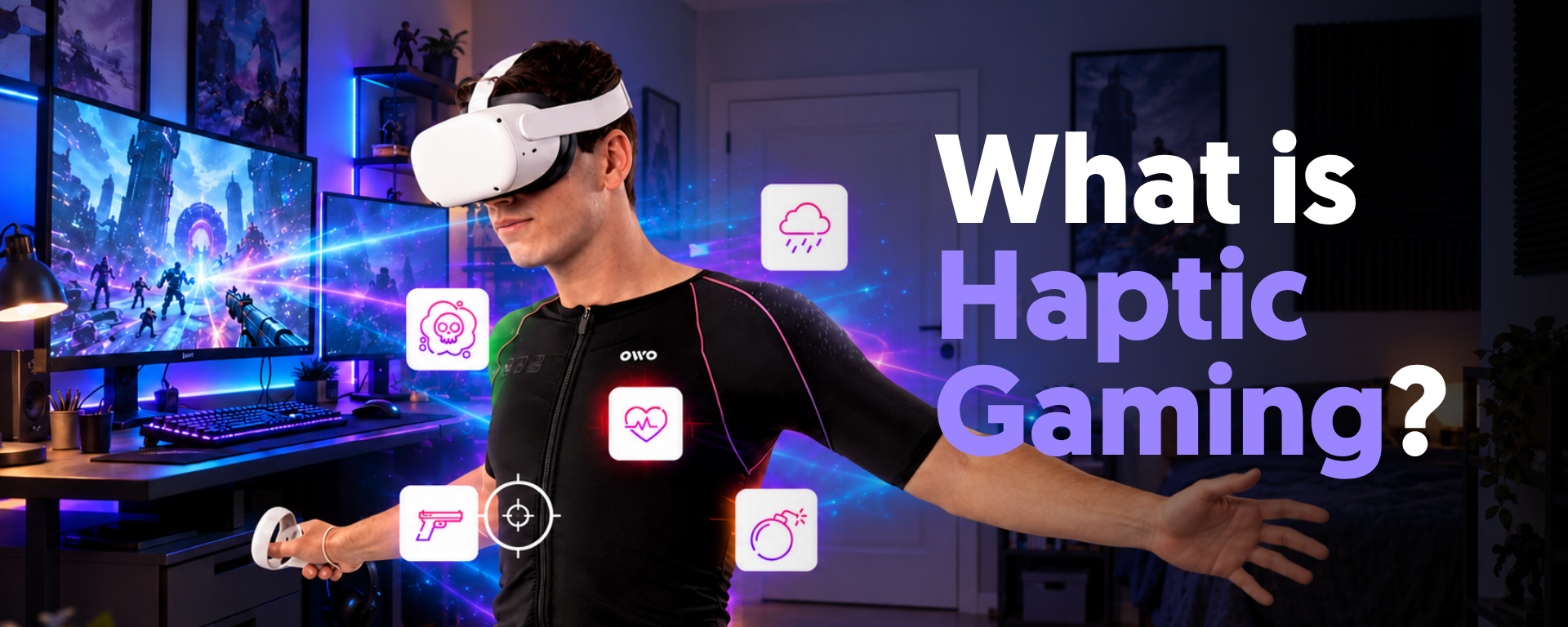
Haptic gaming is about giving videogames a physical layer.
Games already communicate through images and sound. You see an explosion, hear the impact and react to what is happening on screen. Haptic technology adds another channel: touch.
That can be as familiar as a controller vibrating when you fire a weapon, or as advanced as wearable systems that bring supported events to different areas of the body.
The goal is not simply to make games feel “stronger”. The most interesting haptic experiences make actions easier to distinguish physically. A recoil can feel different from incoming damage. A heartbeat can communicate danger without another visual warning. An environmental effect can become something you perceive through your body as well as through the screen.
This is where haptic gaming starts to change the relationship between the player and the game.
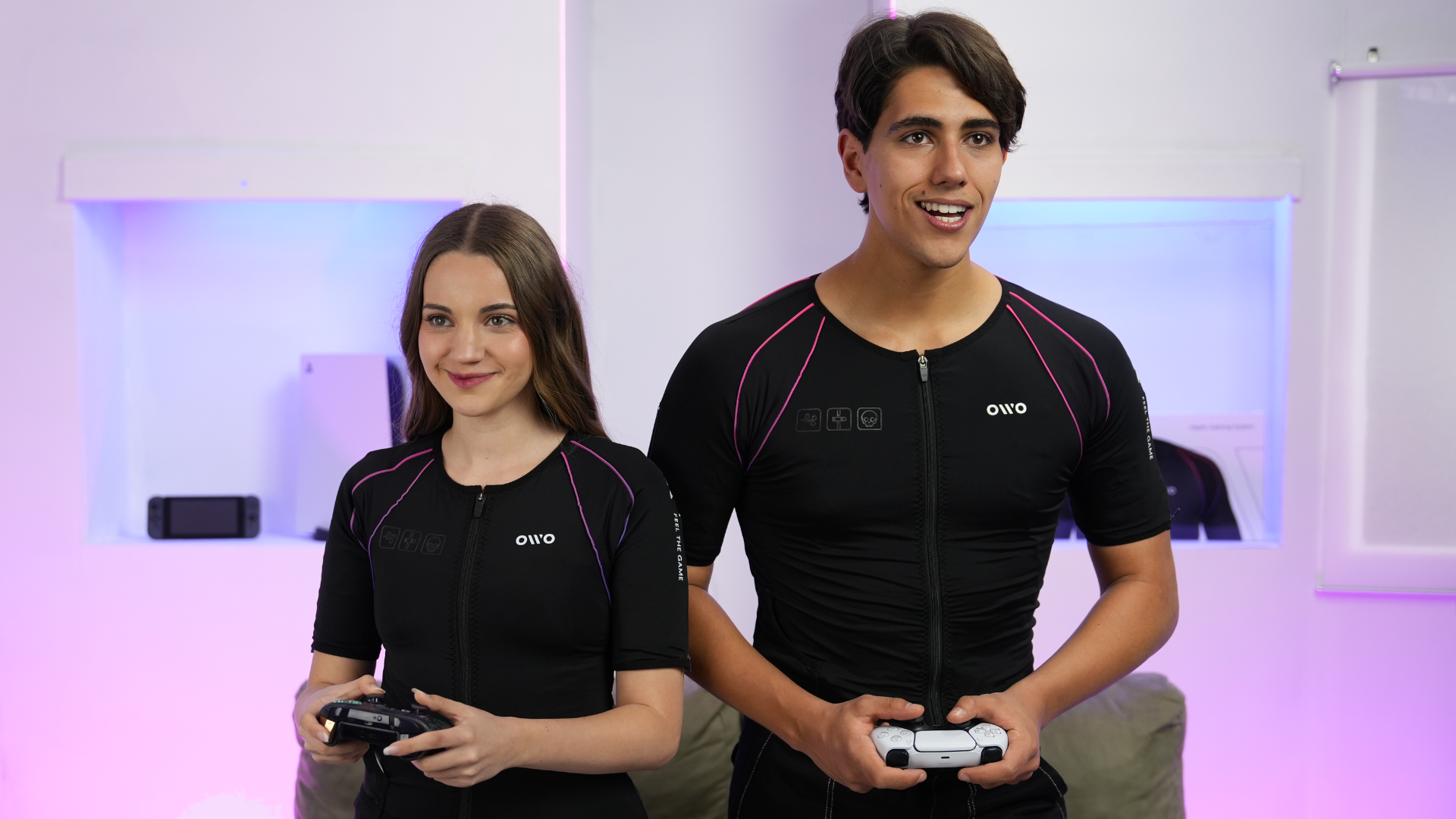
From controller vibration to full-body wearable haptics, physical feedback can make supported actions feel more immediate, readable and connected to what is happening in the game.
Haptics translate selected game events into physical feedback instead of keeping every response on the screen.
Physical feedback can make interactions feel less like something happening to a character and more like something happening around you.
Direction, rhythm, intensity and sensation type can give the player information without adding another icon or sound.
OWO uses controlled electrical stimulation across 10 active muscle zones to create distinct physical sensations.
Haptic gaming is the use of technology to create physical feedback linked to events inside a videogame.
The word haptic relates to the sense of touch. In gaming, that means translating digital actions into something the player can physically perceive.
The simplest example is controller vibration. When your car hits a wall, your weapon fires or your character takes damage, the controller vibrates to reinforce what you see and hear.
But haptic gaming can go much further than that.
Modern haptic systems can place feedback around different areas of the body, react to the direction of an event, use different patterns for different interactions or create entirely different kinds of physical sensations depending on the technology involved.
The important idea is simple: the game gains another way to communicate with the player.
For a broader technical definition, the IEEE Technology Navigator describes haptic interfaces as systems that provide tactile, kinesthetic or force feedback so users can physically sense and interact with virtual or computer-generated environments.
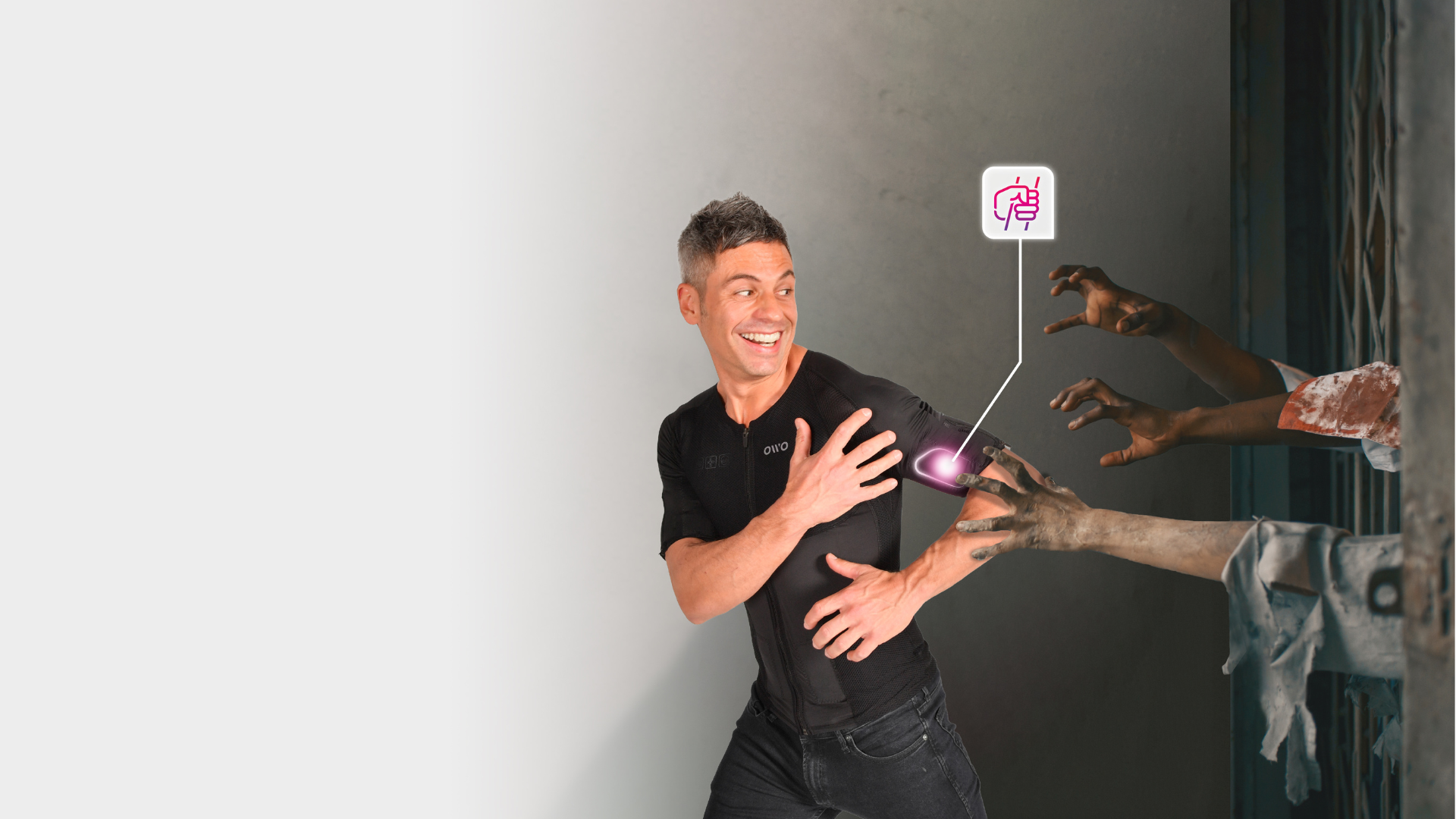
A haptic system needs to know that something happened inside the game and then convert that event into a physical response.
The exact process depends on the hardware and the integration, but the basic flow is usually similar.
A shot is fired, the player takes damage, a car loses grip or another supported action occurs.
The integration determines the location, pattern, intensity or sensation associated with that action.
The controller, vest or wearable produces the physical response at the same moment as the gameplay event.
That synchronization is what makes game-driven haptics different from generic vibration based only on audio.
If the system knows exactly what happened in the game, the feedback can be designed specifically around that event.
A hit from the left can be placed on the left side. A low-health state can create a repeating heartbeat. A shotgun can use a different physical profile from a pistol. A racing integration can react to telemetry rather than simply responding whenever the game becomes loud.
It is tempting to describe haptics with one word: immersion.
That is part of it, but haptic feedback can contribute in several different ways.
Without haptics, most game events remain visually and acoustically separated from your body. You see an impact happen to your character and then interpret it.
A synchronized physical response shortens that distance.
When the visual event, sound and physical sensation arrive together, the interaction can feel more direct because the feedback is no longer confined to the display.
Games already use a huge amount of information to tell you what is happening: HUD indicators, health bars, damage markers, controller feedback, audio cues and animation.
Haptics add another information channel.
A directional hit can help indicate where damage came from. A heartbeat can communicate a dangerous state. Different recoil responses can help separate weapon types physically.
This does not have to replace the HUD. It can complement it.
Good haptics are not simply stronger feedback.
The most useful haptic design gives different gameplay events different physical identities.
This becomes especially noticeable in VR.
Virtual reality already changes the relationship between player and game because you are physically moving your head and hands inside the experience. Your virtual hands may reload a weapon, open a door or reach toward an object.
When those actions produce synchronized physical feedback, the interaction gains another point of connection between the virtual action and your real body.
But haptic gaming is not limited to VR. A flat-screen game can use the same principle. The display may stay in front of you, while physical feedback moves beyond the controller and onto your body.
Haptics do not need to be active constantly.
In fact, some of the most effective moments come from contrast.
A quiet exploration section can make the next impact feel more noticeable. A low-health heartbeat can stay in the background while other effects take priority. A horror game can use a physical response sparingly so the player starts anticipating when the next one will arrive.
Like sound design, haptic design can become part of the pacing.
When a haptic system can place feedback on different parts of the body, location itself becomes useful. An impact from one side can feel different from an event happening somewhere else, helping the player understand space without relying only on visual indicators.
Weapons, abilities, vehicles and status effects do not all need to share the same response. Thoughtful haptic gaming can make repeated actions more recognizable by giving them their own timing, location and physical character.
Not every piece of information needs another icon, warning or animation. Physical feedback can reinforce what is happening while leaving the player’s attention on the game world itself.
“Haptic gaming” describes a broad category rather than one specific technology.
Different devices can create physical feedback in very different ways.
Traditional rumble and more advanced controller systems communicate impact, resistance and texture through the device you hold.
Motors positioned around a vest or wearable can communicate location, direction and intensity through mechanical vibration.
Systems such as OWO Skin use controlled electrical stimulation rather than vibration motors to create body feedback.
This distinction matters because two products described as “haptic vests” may be trying to create very different experiences.
The number of feedback points is only one part of the story. The technology used to produce that feedback determines what those points can actually do.
There is no single perfect haptic effect for every videogame.
The most interesting integrations adapt the feedback to what makes each genre distinctive.
Gunfire can gain different physical profiles while incoming damage can become a spatial cue around the body.
Heartbeat, sudden reactions and longer unsettling effects can extend fear beyond the headset or screen.
Vehicle behaviour, impacts and other simulation data can add another layer around steering, controls and motion.
Hits, healing, magic, environmental effects and status changes can all become candidates for physical feedback.
OWO Skin takes a different route from conventional vibration-based haptic vests.
There are no vibration motors inside the Skin.
Instead, OWO uses controlled electrical stimulation delivered through 10 active muscle zones around the torso and arms. The system uses 10 pairs of electrodes connected through multifilament cables, with the active zones calibrated to the individual wearer.
The purpose of that design is to let supported game events use different physical sensation profiles rather than reducing every interaction to a vibration pattern.
OWO can represent sensations such as impacts, recoil, tension and environmental effects. The exact experience depends on the individual game’s integration.
Different areas can be activated depending on how the supported event has been designed.
Intensity is calibrated so the system can work with differences between body areas and individual users.
OWO supports a growing library of compatible games across different genres and integration methods.
Compatible experiences include PC, PCVR, Meta Quest and supported console environments depending on the game.
A vibration motor creates mechanical movement against the body.
OWO works differently. Controlled electrical signals are delivered through the electrodes, allowing the sensation itself to be shaped using multiple parameters.
That creates an important design opportunity.
A weapon recoil does not need to be represented as “strong vibration”. An impact does not have to be another pattern from the same motor. A heartbeat can have its own rhythm. A prolonged environmental sensation can behave differently again.
The objective is not simply to increase the amount of feedback. It is to make supported events physically distinguishable.
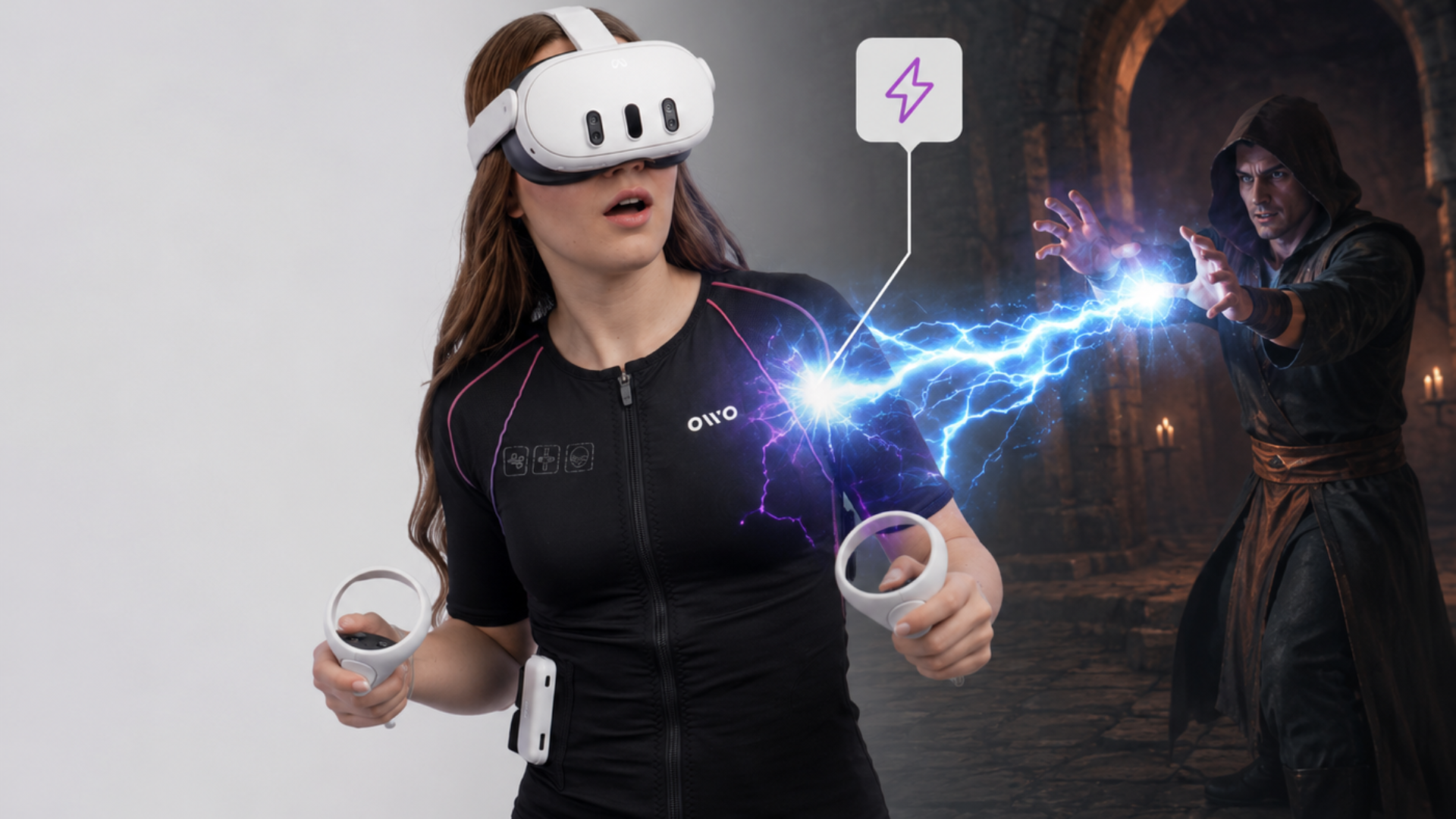
The hardware is only half of a haptic experience.
The other half is knowing what is happening inside the game.
A well-integrated haptic system can react to specific gameplay events rather than simply producing feedback whenever there is a loud sound.
That is how an integration can distinguish a pistol from a shotgun, damage from healing or a normal state from a low-health heartbeat.
OWO’s compatible catalogue uses several integration methods depending on the title, including native support, mods and SimHub-based experiences.
This is also why compatibility matters. A game needs a supported integration before meaningful game events can be translated into physical sensations.
The more useful gameplay information an integration can access, the more specific the physical feedback can become.
One of the long-term goals of immersive technology is to reduce the gap between what the player does and what the game communicates back.
Graphics have become more detailed. Spatial audio makes it easier to understand where sounds are coming from. Motion controls let players interact more naturally with virtual objects.
Haptics extend that progression into touch.
This does not mean the game suddenly becomes reality. Physical feedback is still an interpretation of a digital event.
But when that interpretation is synchronized and meaningful, it gives the game another way to reach the player.
A screen shows the action.
Audio surrounds it.
Haptics give part of that action somewhere to go on your body.
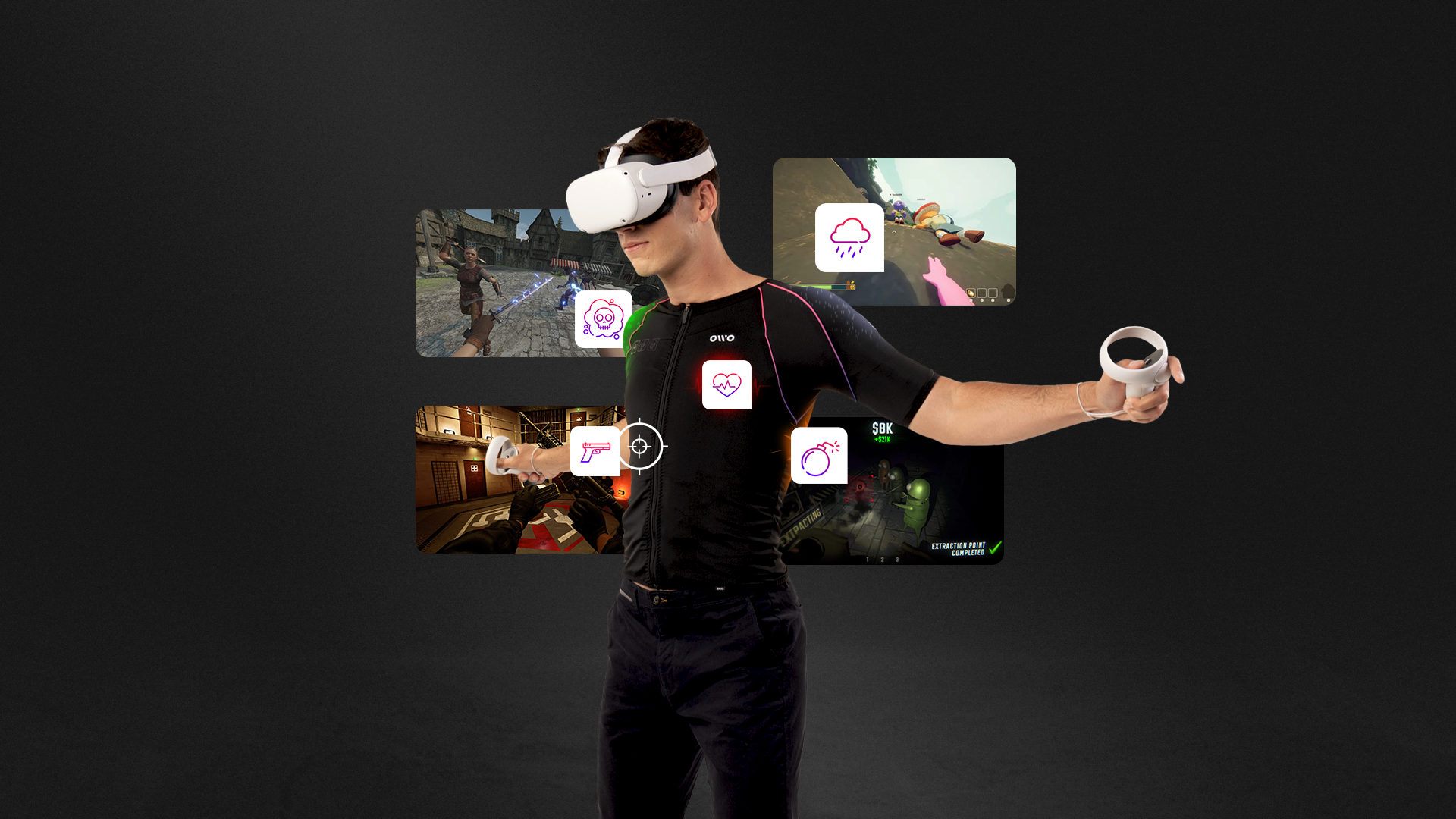
For decades, gaming interaction has focused mainly on what the player sends into the game.
Buttons became analogue sticks. Mice became more precise. Motion controllers started tracking hands in three-dimensional space. VR added head and body movement.
Haptic technology focuses on the other direction: what the game sends back to the player.
That makes haptics interesting not simply as an accessory category, but as another part of interface design.
As integrations become more detailed, physical feedback can become more contextual. Instead of one generic response for “something happened”, games can communicate where it happened, what kind of event it was and how it relates to the player’s current state.
OWO’s approach shows one possible direction for that evolution: moving beyond vibration and using electrical stimulation to give different digital events different physical characteristics.
The future of haptic gaming is unlikely to be about making every moment louder, stronger or more aggressive.
It is more likely to be about making physical feedback smarter.
Haptic gaming does not replace graphics, sound or gameplay design.
It gives them another channel.
At its simplest, that might be a vibration in your hands. At its most advanced, it can mean game-specific feedback distributed around the body, with different actions designed to create different physical responses.
That is what makes the category interesting.
The question is no longer only whether a game looks or sounds convincing. It is whether part of the experience can become physical too.
With OWO Skin, that idea goes beyond conventional vibration. Controlled electrical stimulation across 10 active muscle zones allows supported games to turn events such as impacts, recoil, tension and environmental effects into distinct physical sensations.
You see the game. You hear the game. Haptic gaming asks what happens when you can feel it too.
Explore OWO’s growing library of compatible games and see how different integrations turn gameplay events into physical sensations.
Haptic gaming uses physical feedback to represent events inside a videogame. This can range from controller vibration to wearable systems that create feedback across different areas of the body.
Haptic feedback adds touch as another communication channel between the game and the player. It can reinforce immersion, communicate gameplay information and make supported interactions feel more immediate.
No. Vibration is one form of haptic feedback, but different technologies can create physical responses in different ways. OWO Skin, for example, uses controlled electrical stimulation rather than vibration motors.
A haptic gaming vest is a wearable device that brings game-related physical feedback to the torso and, depending on the system, other areas of the body. Different vests may use vibration, electrical stimulation or other haptic technologies.
OWO Skin uses controlled electrical stimulation across 10 active muscle zones. Supported gameplay events are translated into sensation profiles that can differ in timing, location and physical character.
No. OWO Skin does not use vibration motors. Its haptic system is based on controlled electrical stimulation.
Yes. OWO’s compatible-game library continues to grow, with integrations including native support, mods and SimHub depending on the title.
No. Haptic gaming can be used with both VR and traditional gaming setups. OWO’s compatible catalogue includes PC, PCVR, Meta Quest and supported console experiences depending on the individual game.
We accept
Secure Checkout
Shopping is always safe and secure
Easy returns
you can request a return within 14 days of delivery
Need more help? Email us or call (+34) 672712281
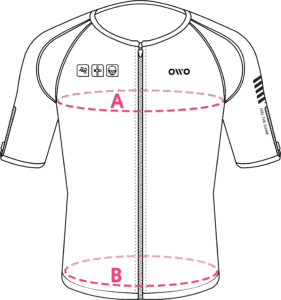
Measure your chest (A) and hips (B) following our indications.
The reference measurement will always be the larger of the two (A or B).
Look in the chart to which size corresponds to that measurement.
| Size | Reference measurements | |
|---|---|---|
| Inches | Centimeters | |
| 2XS | 25.6 – 29.4 | 65 – 74 |
| XS | 29.5 – 32.6 | 75 – 82 |
| S | 32.7 – 36.1 | 83 – 91 |
| M | 36.2 – 39.7 | 92 – 100 |
| L | 39.8 – 42.8 | 101 – 108 |
| XL | 42.9 – 46.3 | 109 – 117 |
| 2XL | 46.4 – 49.9 | 118 – 126 |
| 3XL | 50 – 53 | 127 – 134 |
| 4XL | 53.1 – 55.9 | 135 – 142 |

